
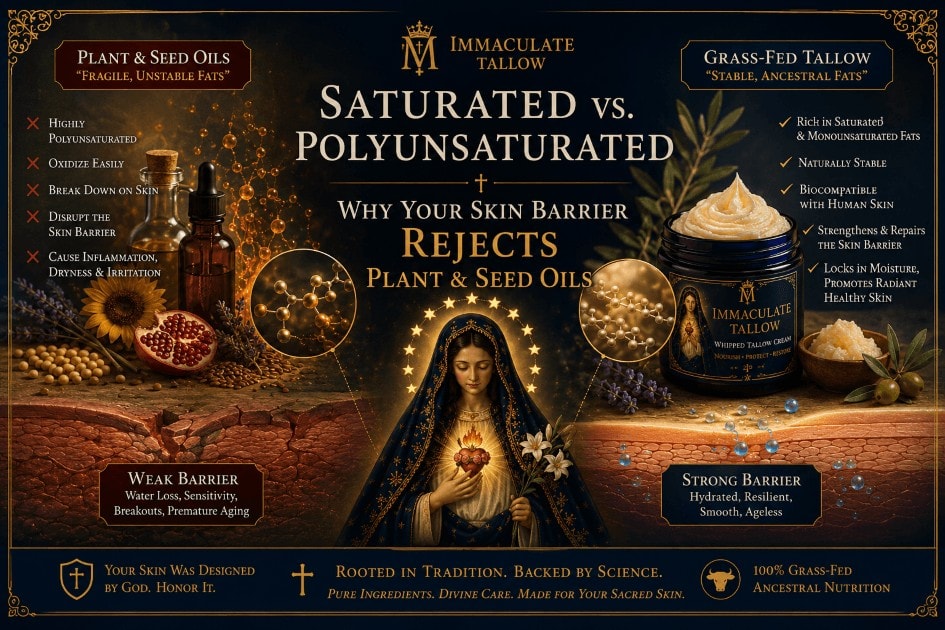
Saturated vs. Polyunsaturated
The modern skincare industry has spent decades convincing us that liquid plant botanicals are the golden standard. But chemical reality paints a very different story.
Many individuals find that despite applying expensive botanical oils, their skin remains in a chronic cycle of dehydration or irritation. To understand why, we must examine the basic stability of the fats we put on our bodies.
The Problem With Fragile Oils
Plant and seed oils (such as sunflower, rosehip, or argan) are primarily polyunsaturated fatty acids (PUFAs). This structural layout makes them incredibly sensitive to oxygen, light, and heat.
When you apply these to your face, those delicate lipids can quickly oxidize. Instead of nourishing your outer layer, oxidized oils create oxidative stress, quietly fatiguing your natural skin barrier.
Why Saturated Animal Fats Stand Guard
- Zero Oxidative Stress
Lacking the volatile double-bond layout of seed oils, tallow remains stable under UV exposure. - Anatomical Match
Because human skin oils are largely saturated, your face natively recognizes tallow as an identical match. - Deep Moisture Locking
It seamlessly integrates into your cell membranes to combat moisture loss without synthetic barriers.
True Bio-Compatibility
While plant products sit on the surface as an artificial glaze, your skin knows what to do with traditional grass-fed fats. By switching to pure grass-fed tallow, you stop fighting your skin's biological layout and begin honoring the design it was born with.
The Sacred Collection
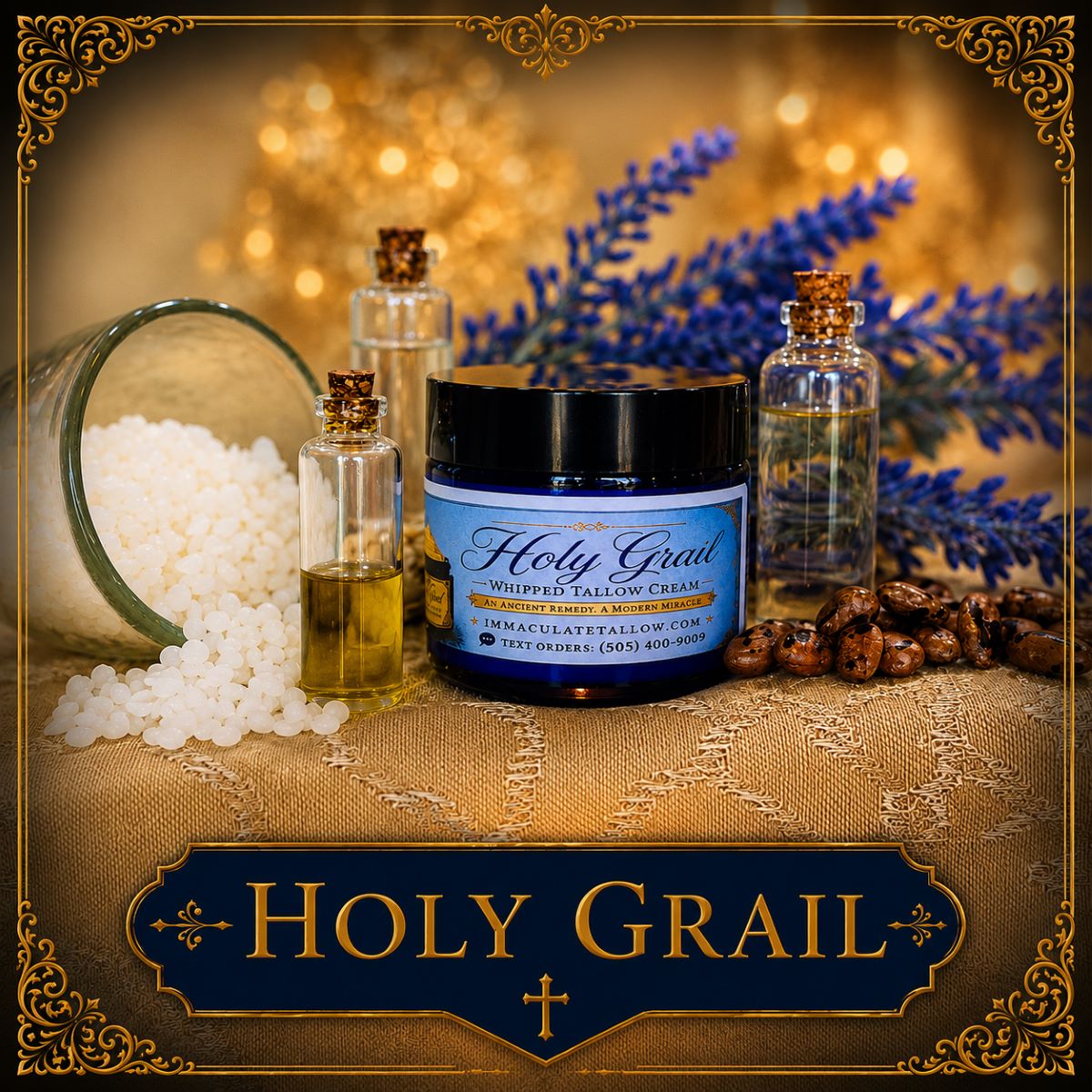
Holy Grail
Nourish & Glow →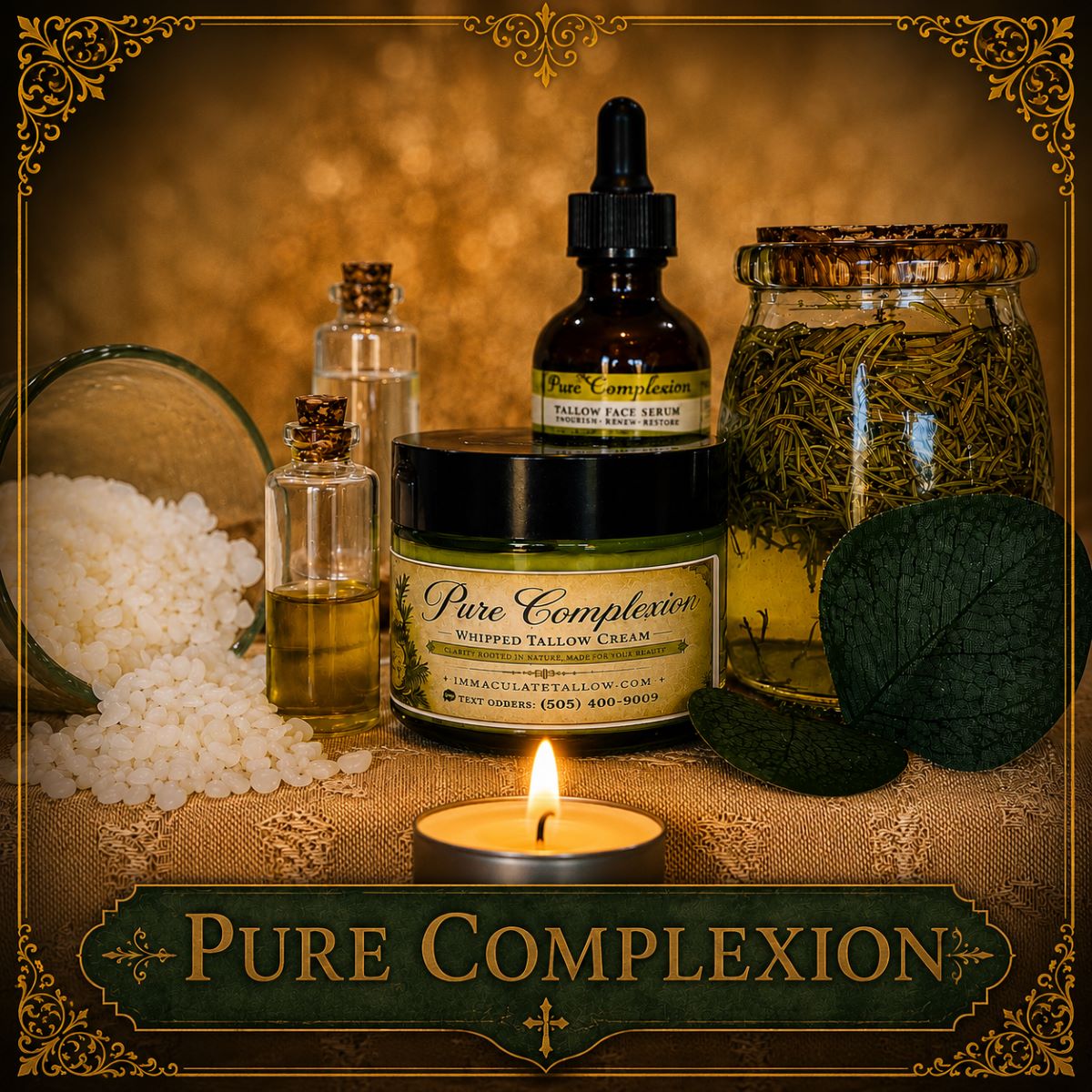
Pure Complexion
Balance & Clear →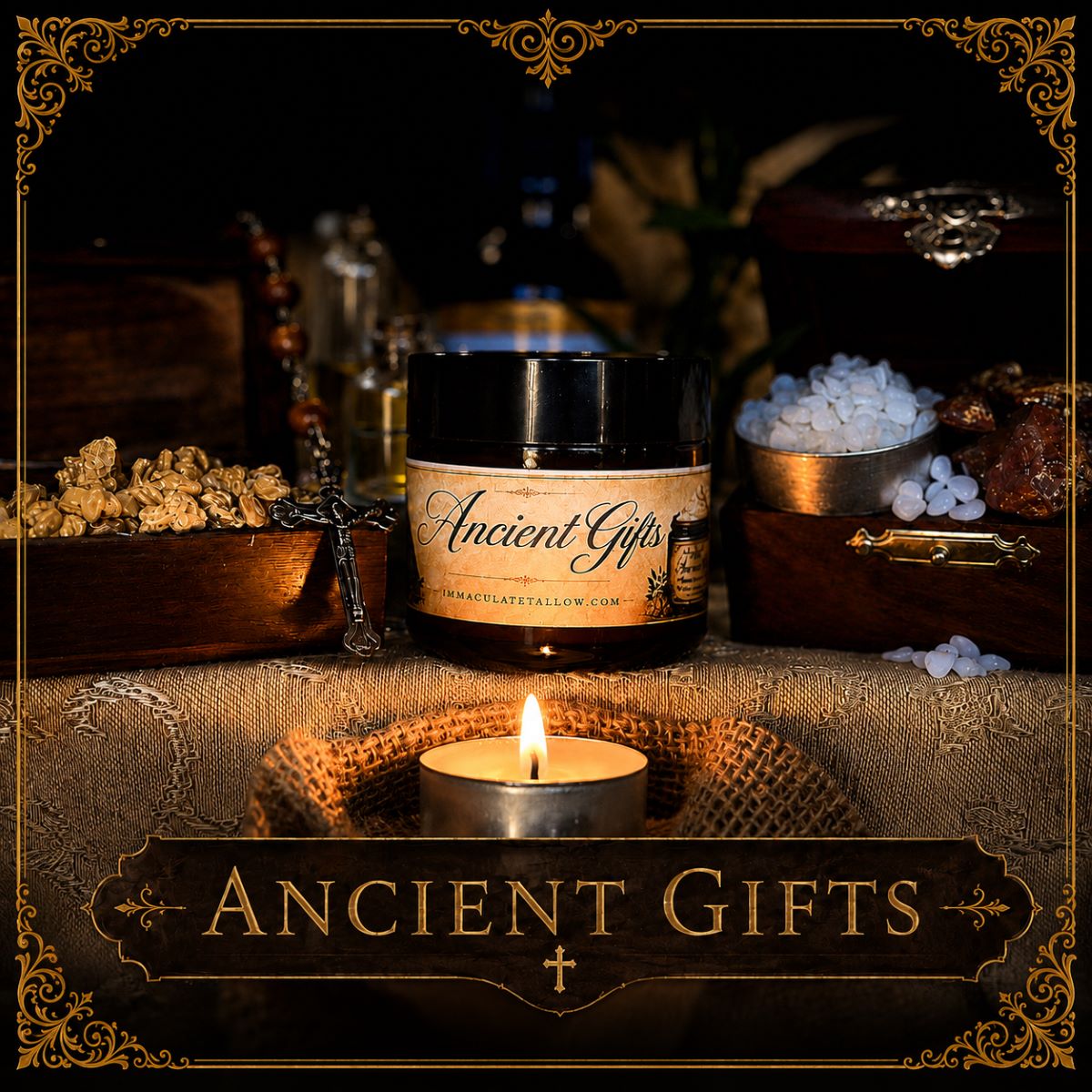
Ancient Gifts
Restore & Renew →
Recent Comments